AI Automation for Precision Dosing Systems
How sensor data, control logic, and AI-assisted decisions turn sensitive dosing equipment into a safer and more measurable production system.
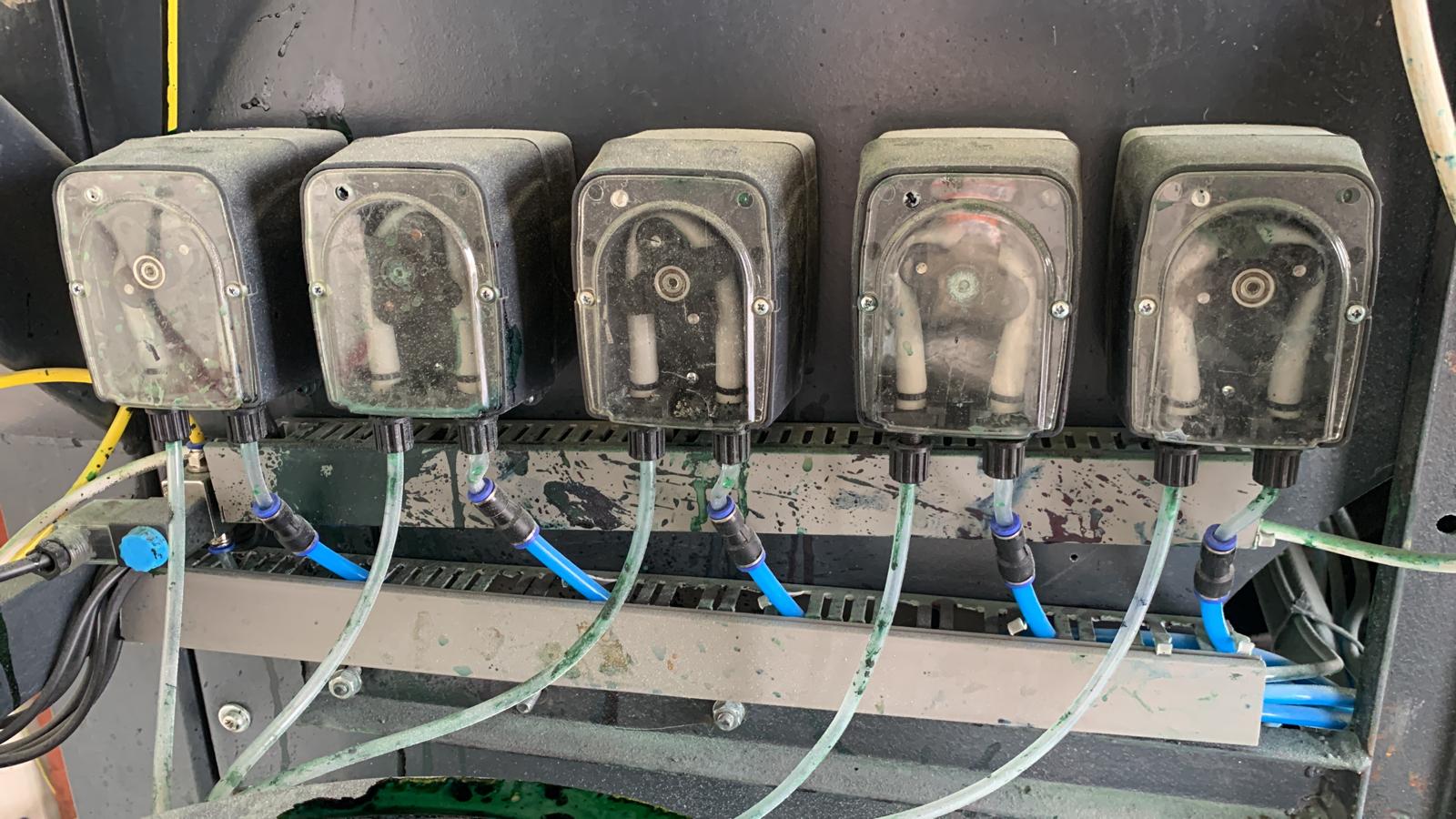
Precision dosing is a software problem as much as it is a mechanical one. The physical system has pumps, valves, tanks and flow paths, but the value comes from how accurately the software can read the process, react to changes, and make each action traceable.
Why dosing needs intelligent control
In sensitive milliliter-based dosing, small deviations can become quality issues. A modern control layer watches target volume, actuator timing, pressure behavior and operator commands together. AI does not replace deterministic control; it helps the system recognize drift, repeated patterns and abnormal behavior before they become downtime.
From signal to decision
- Sensor capture: collect flow, pressure, cycle time and state changes from the dosing equipment.
- Edge validation: filter noisy readings and keep safety-critical decisions close to the machine.
- Cloud visibility: send clean events to dashboards for history, comparison and reporting.
- AI assistance: detect unusual cycles, recommend calibration checks and highlight recurring anomalies.
Operator experience matters
The interface must show what is happening now, what changed, and what the next safe action is. For LexpAI, that means building dashboards where target values, machine state, warnings and production records are visible without forcing the operator to interpret raw telemetry.
The LexpAI approach
We design dosing automation as a connected product: embedded control for reliability, HMI for confident operation, LXPCloud for traceability, and AI workflows for continuous improvement. The result is not a flashy algorithm; it is a practical system that makes each dosing cycle more measurable, auditable and easier to maintain.
The industrial landscape is undergoing a profound transformation, driven by the integration of artificial intelligence into automation systems. What was once a vision of the future is now becoming a reality, as AI-powered solutions are reshaping how factories operate, maintain equipment, and ensure quality control.
The Evolution of Industrial Automation
Traditional industrial automation relied heavily on pre-programmed systems that followed rigid, rule-based processes. While effective for repetitive tasks, these systems lacked the flexibility and intelligence needed to adapt to changing conditions or optimize performance in real-time.
The introduction of AI has changed this paradigm entirely. Modern automation systems can now:
- Learn from data: AI algorithms analyze vast amounts of operational data to identify patterns and optimize processes
- Predict failures: Machine learning models can forecast equipment failures before they occur, enabling proactive maintenance
- Adapt to changes: Intelligent systems can adjust parameters automatically based on real-time conditions
- Improve quality: Computer vision and AI can detect defects with higher accuracy than human inspectors
Predictive Maintenance: A Game Changer
One of the most significant applications of AI in industrial automation is predictive maintenance. Traditional maintenance schedules are often based on time intervals or reactive responses to failures, leading to either unnecessary maintenance or unexpected downtime.
AI-powered predictive maintenance systems monitor equipment health in real-time using sensors that collect data on vibration, temperature, pressure, and other critical parameters. Machine learning algorithms analyze this data to:
- Identify early warning signs of potential failures
- Predict the remaining useful life of components
- Optimize maintenance schedules to minimize downtime
- Reduce maintenance costs by preventing unnecessary interventions
"Predictive maintenance can reduce maintenance costs by 25-30%, eliminate breakdowns by 75%, and reduce downtime by 35-45%." - McKinsey & Company
Intelligent Quality Control
Quality control is another area where AI is making a significant impact. Traditional quality inspection often relies on human operators who can miss defects due to fatigue, distraction, or the limitations of human vision.
AI-powered vision systems can:
- Inspect products 24/7 without fatigue
- Detect defects that are invisible to the human eye
- Learn from new defect patterns and improve over time
- Provide consistent and objective quality assessments
Smart Manufacturing and Industry 4.0
The concept of Industry 4.0 represents the fourth industrial revolution, characterized by the integration of cyber-physical systems, the Internet of Things (IoT), and AI. In smart factories, every machine, sensor, and process is connected and can communicate with each other.
Key components of AI-driven smart manufacturing include:
- Digital Twins: Virtual representations of physical assets that enable simulation and optimization
- Edge Computing: Processing data closer to the source for faster decision-making
- Autonomous Systems: Self-optimizing production lines that can adjust to demand changes
- Supply Chain Optimization: AI algorithms that optimize inventory, logistics, and production scheduling
Challenges and Considerations
While the benefits of AI in industrial automation are clear, there are several challenges that organizations must address:
Data Quality and Integration
AI systems require high-quality, well-integrated data from multiple sources. Many industrial facilities have legacy systems that don't communicate well with each other, making data integration a significant challenge.
Cybersecurity
As industrial systems become more connected, they become more vulnerable to cyber attacks. Organizations must implement robust cybersecurity measures to protect their AI-powered automation systems.
Workforce Training
The introduction of AI systems requires a workforce that can work effectively with these technologies. Training programs must be developed to help employees understand and operate AI-powered systems.
The Road Ahead
The future of industrial automation with AI is incredibly promising. As technology continues to advance, we can expect to see:
- More sophisticated AI algorithms that can handle complex decision-making
- Greater integration between different systems and processes
- Enhanced human-AI collaboration that leverages the strengths of both
- Sustainable manufacturing practices optimized by AI
At LexpAI, we're at the forefront of this transformation, developing cutting-edge AI solutions that help industrial organizations achieve new levels of efficiency, quality, and productivity. Our expertise in embedded systems, IoT, and machine learning enables us to create intelligent automation solutions that drive real business value.
Conclusion
The integration of AI into industrial automation represents a fundamental shift in how we approach manufacturing and production. By embracing these technologies, organizations can achieve unprecedented levels of efficiency, quality, and competitiveness.
The future is not just about replacing human workers with machines, but about creating intelligent systems that work alongside humans to achieve better outcomes. As we continue to develop and refine AI-powered automation solutions, the possibilities for industrial transformation are limitless.