Modern C++ for Embedded Product Engineering
What matters when embedded firmware, hardware constraints, communication protocols, and maintainable product software meet.
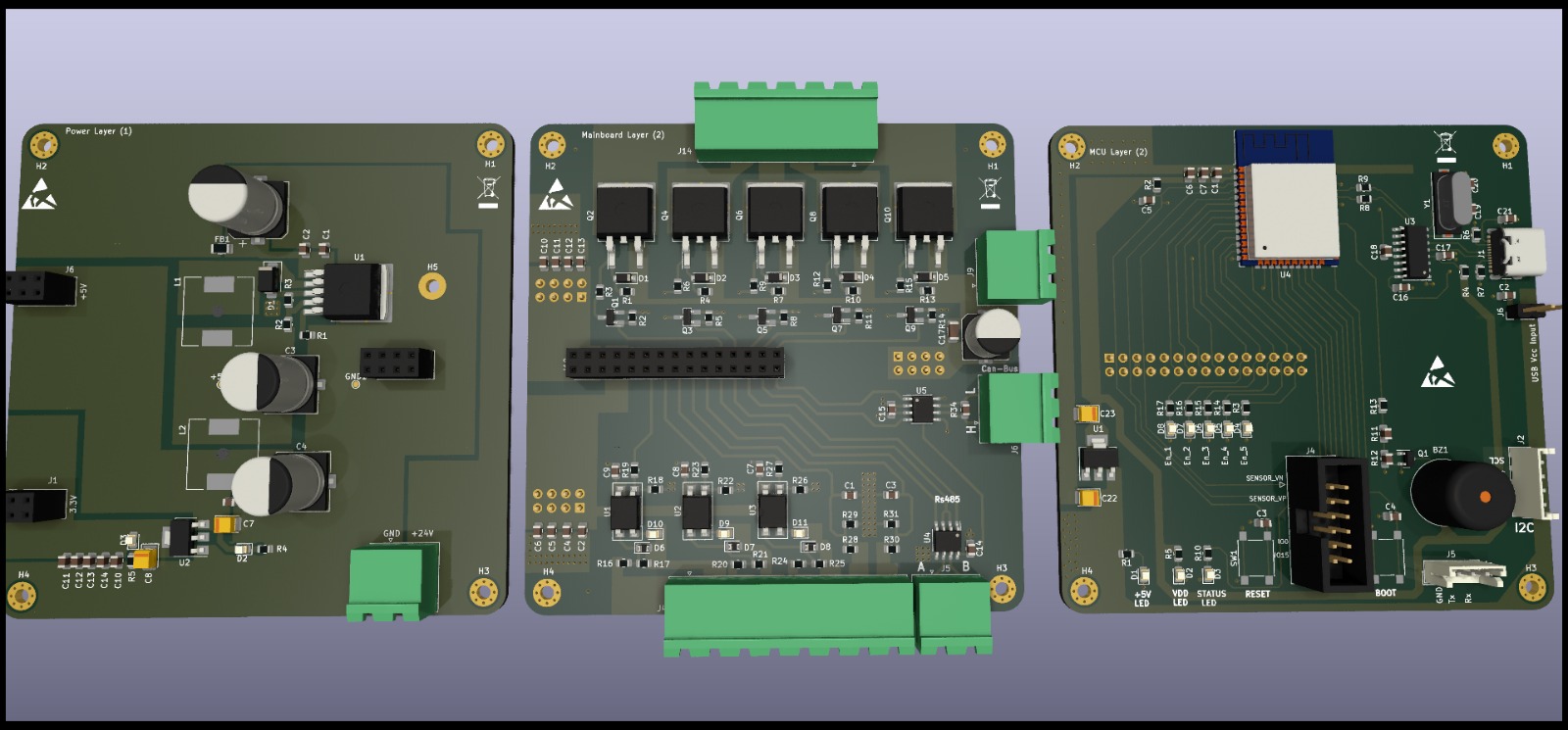
Embedded product engineering is where software decisions meet physical limits. The code has to respect memory, timing, power and hardware behavior, while still being readable enough to evolve after the prototype becomes a product.
Why modern C++ fits embedded products
Modern C++ gives embedded teams strong type safety, zero-cost abstractions and compile-time checks without giving up hardware control. Used carefully, it helps firmware teams model devices, protocols and state machines in a way that is easier to test and maintain.
Patterns we care about
- Explicit ownership: make buffers, drivers and communication objects clear about who controls them.
- Compile-time configuration: use templates and constexpr for board variants and protocol constants.
- Deterministic behavior: avoid hidden allocations and uncontrolled latency in real-time paths.
- Hardware-aware testing: combine unit tests, static analysis and validation on actual boards.
From board to cloud
The embedded card is only one part of the product. Firmware must speak cleanly with HMI software, device agents and cloud services. That means designing protocol boundaries early, logging enough context, and keeping update paths maintainable.
The LexpAI approach
LexpAI builds embedded software as part of an end-to-end system. We connect C++ firmware, industrial protocols, UI surfaces and LXPCloud telemetry so hardware products are easier to operate, diagnose and improve after deployment.
Modern C++ has evolved significantly over the past decade, introducing powerful features that make it an excellent choice for embedded systems development. While traditional embedded development often relied on C for its simplicity and direct hardware access, modern C++ offers better abstraction, type safety, and performance optimization opportunities.
Why Modern C++ for Embedded Systems?
The embedded systems landscape has changed dramatically. Today's microcontrollers are more powerful, memory is more abundant, and the complexity of embedded applications has increased. Modern C++ addresses these challenges with features that were previously unavailable or impractical.
Key Benefits:
- Type Safety: Compile-time type checking prevents many runtime errors
- RAII (Resource Acquisition Is Initialization): Automatic resource management
- Templates: Generic programming without runtime overhead
- constexpr: Compile-time computation
- Smart Pointers: Memory management without garbage collection
Essential Modern C++ Features for Embedded Development
1. constexpr and Compile-Time Programming
One of the most powerful features for embedded systems is constexpr, which allows computation at compile time. This is particularly useful for:
- Mathematical calculations
- Lookup tables
- Configuration validation
- CRC calculations
// Compile-time CRC calculation
constexpr uint32_t crc32_table[256] = {
    0x00000000, 0x77073096, 0xEE0E612C, 0x990951BA,
    // ... more values computed at compile time
};

constexpr uint32_t calculate_crc32(const char* data, size_t length) {
    uint32_t crc = 0xFFFFFFFF;
    for (size_t i = 0; i < length; ++i) {
        crc = crc32_table[(crc ^ data[i]) & 0xFF] ^ (crc >> 8);
    }
    return crc ^ 0xFFFFFFFF;
}
2. Templates and Generic Programming
Templates allow you to write generic code that works with different types without runtime overhead. This is especially useful for:
// Generic ring buffer implementation
template<typename T, size_t Size>
class RingBuffer {
private:
    T buffer[Size];
    size_t head = 0;
    size_t tail = 0;
    size_t count = 0;

public:
    bool push(const T& item) {
        if (count >= Size) return false;
        buffer[tail] = item;
        tail = (tail + 1) % Size;
        count++;
        return true;
    }

    bool pop(T& item) {
        if (count == 0) return false;
        item = buffer[head];
        head = (head + 1) % Size;
        count--;
        return true;
    }

    size_t size() const { return count; }
    bool empty() const { return count == 0; }
    bool full() const { return count == Size; }
};
3. RAII and Smart Pointers
RAII ensures that resources are properly managed through object lifetime. In embedded systems, this is crucial for:
// RAII for GPIO management
class GPIO {
private:
    uint32_t port;
    uint16_t pin;
    bool initialized = false;

public:
    GPIO(uint32_t port, uint16_t pin) : port(port), pin(pin) {
        // Initialize GPIO in constructor
        initialize_gpio(port, pin);
        initialized = true;
    }

    ~GPIO() {
        if (initialized) {
            // Cleanup in destructor
            deinitialize_gpio(port, pin);
        }
    }

    void set_high() { /* implementation */ }
    void set_low() { /* implementation */ }
    bool read() { /* implementation */ }

    // Prevent copying
    GPIO(const GPIO&) = delete;
    GPIO& operator=(const GPIO&) = delete;
};
Memory Management Strategies
Static Memory Allocation
For real-time systems, dynamic memory allocation is often avoided. Modern C++ provides excellent tools for static allocation:
// Static memory pool
template<typename T, size_t PoolSize>
class MemoryPool {
private:
    alignas(T) uint8_t pool[PoolSize * sizeof(T)];
    bool used[PoolSize] = {false};

public:
    T* allocate() {
        for (size_t i = 0; i < PoolSize; ++i) {
            if (!used[i]) {
                used[i] = true;
                return reinterpret_cast<T*>(&pool[i * sizeof(T)]);
            }
        }
        return nullptr;
    }

    void deallocate(T* ptr) {
        size_t index = (reinterpret_cast<uint8_t*>(ptr) - pool) / sizeof(T);
        if (index < PoolSize) {
            used[index] = false;
        }
    }
};
Real-Time Considerations
Deterministic Behavior
Real-time systems require predictable execution times. Modern C++ features that help achieve this include:
- constexpr functions: Guaranteed compile-time execution
- Template metaprogramming: No runtime overhead
- Static allocation: Predictable memory usage
- Exception-free code: Using noexcept specifications
Exception Handling
In real-time systems, exception handling can introduce unpredictable timing. Consider these approaches:
// Exception-free error handling
enum class ErrorCode {
    Success,
    InvalidParameter,
    Timeout,
    HardwareError
};

template<typename T>
class Result {
private:
    union {
        T value;
        ErrorCode error;
    };
    bool is_error;

public:
    Result(const T& val) : value(val), is_error(false) {}
    Result(ErrorCode err) : error(err), is_error(true) {}

    bool has_value() const { return !is_error; }
    T get_value() const { return value; }
    ErrorCode get_error() const { return error; }
};
Performance Optimization Techniques
1. Compiler Optimizations
Modern C++ compilers are excellent at optimizing code. Key techniques include:
- Using
constandconstexprextensively - Leveraging
inlinefunctions - Using
[[nodiscard]]attributes - Optimizing for specific architectures
2. Template Specialization
Template specialization allows you to provide optimized implementations for specific types:
// Generic algorithm
template<typename T>
T multiply(T a, T b) {
    return a * b;
}

// Specialized for integers (faster)
template<>
int multiply<int>(int a, int b) {
    // Optimized integer multiplication
    return a * b;
}
Best Practices for Embedded C++
1. Code Organization
- Use namespaces to organize code
- Implement proper header guards
- Separate interface from implementation
- Use consistent naming conventions
2. Error Handling
- Prefer return codes over exceptions for real-time systems
- Use
[[nodiscard]]for error codes - Implement comprehensive error logging
- Provide meaningful error messages
3. Testing and Validation
- Write unit tests for all critical functions
- Use static analysis tools
- Perform timing analysis
- Test on actual hardware
Conclusion
Modern C++ offers powerful features that make it an excellent choice for embedded systems development. By leveraging features like constexpr, templates, RAII, and smart pointers, developers can create more robust, maintainable, and efficient embedded applications.
The key is to understand which features are appropriate for your specific use case and to use them judiciously. Not every modern C++ feature is suitable for all embedded applications, but when used correctly, they can significantly improve code quality and performance.